Chinese now available on Speak
June 2, 2026

Mandarin Chinese has been our most-requested language for years. Today, Chinese is live on Speak, built for people who want to actually speak it, not just study it.
The course covers beginner through intermediate (B1) today, with more on the way this summer.
Chinese doesn't behave like the languages we've launched before. The pronunciation is very difficult for English speakers, cultural context shapes whether a sentence lands, and the path from beginner to conversational requires a different kind of approach.
Sound first: pronunciation and tones
Mandarin pronunciation has a few moving parts, and pinyin is the most common system for writing its sounds in the Roman alphabet. Each pinyin syllable has two elements: a base sound and a tone. The base sound is what you say; the tone is how your pitch changes while saying it, which can change the word's meaning. This course helps learners build Mandarin pronunciation from familiar English sounds, while flagging where Mandarin works differently.
Each unit includes a pronunciation-focused lesson that reinforces the pronunciation of the words used in that unit. This is then followed by simulated conversation lessons, where learners get to apply that knowledge to complete a task.
Tones are one of the most distinctive features of Chinese as a spoken language, and are both the part most learners fixate on, and what trips them up. Your ear has to learn to hear them before you can reliably produce them. Rushing that step doesn't speed anything up.
In one of the early lessons in the course, you’ll kick off tone with an example like: tāng (1st tone): 汤 = soup; táng (2nd tone): 糖 = candy; tǎng (3rd tone): 躺 = to lie down; tàng (4th tone): 烫 =scalding hot to show the variety in tones.
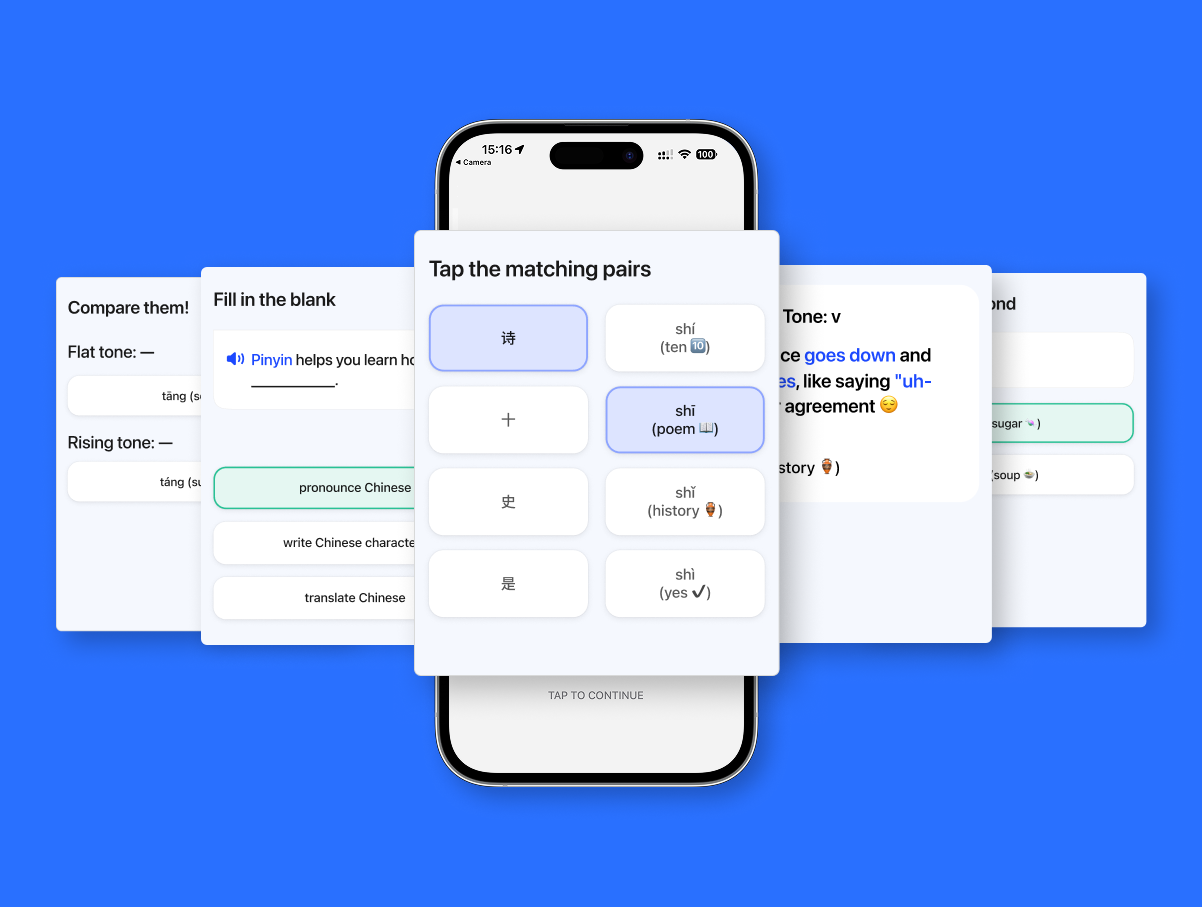
Our core principle underneath all of it: communicate to be understood, not to be perfect. That's where speaking actually starts.
Culture, built into how you learn
You can't separate Mandarin from where and how it's used. Who you're talking to changes the words you use. Addressing a stranger, a coworker, and a close friend can mean three different versions of the same sentence.
Our beginner units lean into the situations you'd actually find yourself in: a boba shop, a souvenir stall, the inside of a taxi. One specific example, it’s common place to scan a QR code to order food in a lot of restaurants across China. In our beginner unit, we added in a restaurant course so you can practice what you actually need to say to get through the moment.
Intermediate goes further into ground that demands more nuance, like negotiating a lease or explaining a choice you made. Throughout both, the explanation cards in speaking practice carry the cultural notes alongside the grammar, and the video lessons spend real time on context. If a phrase only works in a casual setting, we say so.
Mandarin rewards the time you put into it. This course is built to make every minute count. The right practice in the right order, so when you start speaking, you're understood.
Huānyíng (欢迎)! Welcome to Chinese on Speak.